Sod Installation vs. Seeding: Costs, Pros & Cons Explained
Is your lawn stuck in the mud—or worse, patchy and bare? You’re not alone. Every property owner stares down the same fork in the road: sod or seed? Each choice shapes your curb appeal and your wallet for years to come.
At Top-Up Landscape, we’ve seen lawns transform overnight and others blossom with patience. Let’s walk through the real differences so you can choose the best path for your landscape—whether you’re rolling out the green carpet at home or upgrading a commercial property.
Sod vs. Seeding: The Real-World Scenario
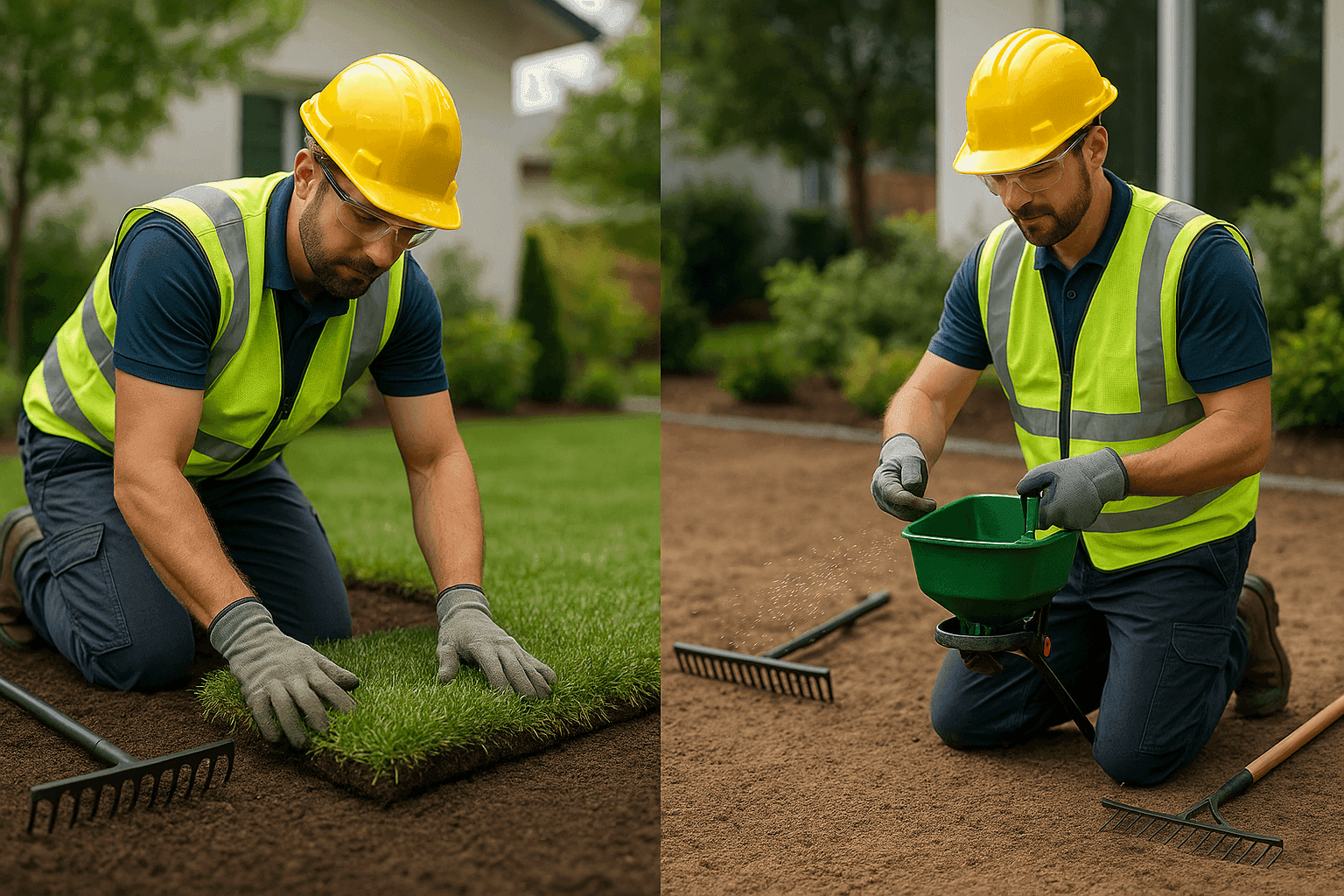
Imagine two neighbors. One comes home to instant, lush grass. The other waits, watering and watching tiny shoots appear. Sod is like laying down a finished puzzle, while seeding is planting the pieces and watching the picture develop.
Sod Installation
- Pre-grown grass rolls or slabs.
- Instantly green, walkable within weeks.
- Higher upfront cost, but immediate results.
Seeding a Lawn
- Spreading grass seed over prepared soil.
- Lower initial expense, but needs time and care.
- Can select specialized mixes for shade, sun, or play areas.
Cost Breakdown: Materials, Labor, and Maintenance 💰
Materials
- Sod: Costs more per square foot. You’re paying for mature turf, soil, and transport.
- Seed: Bagged seed is inexpensive. You’ll need soil amendments, mulch, and possibly starter fertilizer.
Labor
- Sod: Heavy lifting. Stripping old turf, leveling, and laying rolls. Labor can be significant—especially for large or sloped areas.
- Seeding: Less physically demanding. Prepping and spreading seed can be a DIY job on smaller lawns.
Maintenance
- Sod: Needs plenty of water immediately. Roots must knit into your soil. Once established, treat as mature grass.
- Seed: High attention at first. Daily watering is a must. Weed control is vital since young grass can’t compete.
Ongoing Costs
- Fertilization near you: Both methods benefit from regular fertilization.
- Weed & pest control: Essential, especially for new seedlings.
- Irrigation systems: Can lower long-term water bills and protect your investment.
Real-world ranges:
- Sod: $1.00–$2.50/sq ft installed
- Seed: $0.10–$0.20/sq ft, with labor extra
Timeline to Results: How Fast Will You See Green?
- Sod: Green immediately. Usable in 2–3 weeks, but avoid heavy use for 4–6 weeks.
- Seed: Germination in 7–21 days (weather and variety matter). Full coverage can take a season or longer.
If you’re prepping for an outdoor event or commercial opening, sod wins the race. But for those who value the journey—and don’t mind a little dirt under their nails—seeding can be deeply satisfying.
Long-Term Upkeep: What’s Easier Down the Road?
- Sod: Once settled, behaves like any established lawn. However, poorly installed sod can develop seams or fail to root, leading to headaches later.
- Seed: More adaptable to your soil and microclimate. May require spot reseeding in patchy areas, especially after heavy rains or foot traffic.
Pro tip: Both methods need seasonal cleanups, pest control, and routine mowing. Well-timed fertilization and soil testing help maintain that rich green color.
Residential vs. Commercial Properties: Which Suits Your Site?
Residential Lawns
- Sod: Fastest curb appeal. Great for families, pet owners, and new construction.
- Seed: Flexible and budget-friendly. Good for patient homeowners or shaded yards.
Commercial Properties
- Sod: Best for high-traffic areas, quick turnover, and consistent appearance (think office parks, retail fronts, or rental units).
- Seed: Suitable for large open spaces, slopes, or areas where budget is critical. Can be blended to match existing turf.
Environmental & Regional Factors 🌱
Climate
- Sod is grown in specific climates—make sure your supplier matches your region. Warm-season sod struggles in cool areas, and vice versa.
- Seed mixes can be tailored for sun, shade, drought, or heavy use. Cool-season blends thrive in northern zones; warm-season in southern.
Soil
- Both need proper soil prep. Compacted or poorly draining soil means trouble down the line.
- Soil testing is your best friend. Adjust pH and nutrients before you start.
Water Use
- Sod demands heavy watering at first, but once rooted, may conserve water better.
- Seeded lawns can be more drought tolerant if you choose the right mix.
Site Preparation: The Make-or-Break Step
No shortcut here. Whether you choose sod or seed, prepping the soil is like building a house on a strong foundation.
Essentials:
- Clear debris, weeds, and old turf.
- Grade soil for drainage.
- Loosen compacted areas.
- Add compost or topsoil if needed.
- Level and lightly roll.
Neglect prep, and you may face uneven growth, drainage issues, or poor root development.
Common Mistakes to Avoid
- Skipping soil testing.
- Laying sod on poorly prepped ground.
- Over- or under-watering new grass.
- Ignoring weed growth in early weeks.
- Walking on sod or seedlings too soon.
Practical Tips for Success
- Water early in the morning to reduce evaporation.
- Mulch seeded areas lightly to retain moisture.
- Use erosion blankets on slopes.
- Schedule fertilization near you for best results.
- For commercial lawns, install irrigation systems for even coverage.
Calculating the True Cost
Don’t just look at the price tag. Consider:
- Preparation: Time, labor, and amendments.
- Materials: Sod, seed, fertilizer, mulch.
- Maintenance: Water, mowing, weed control.
- Replacement: Patch repairs, overseeding, or re-sodding.
A well-maintained seeded lawn may save money but takes patience. Sod is an investment in instant beauty and function.
Frequently Asked Questions
How do I know if my soil is ready?
Test for pH, nutrients, and compaction. Local extension offices and the USDA provide guidelines. Healthy soil means healthy grass.
Can I walk on new sod or seed?
Stay off for at least 2–3 weeks. Sod needs time to root; seedlings are fragile. Too much traffic can leave permanent scars.
When is the best time to plant?
Spring and early fall are ideal—cooler temps and regular rain make establishment easier. Avoid summer heat unless you have robust irrigation.
Will weeds take over my new lawn?
Not if you prepare well and act quickly. Weed seeds love bare soil. Use pre-emergent controls and mulch, and keep an eye out in the first few weeks.
Local and Seasonal Considerations 🌦️
- In northern regions, late summer or early fall seeding avoids summer heat stress and winterkill.
- Southern lawns benefit from spring or early summer sod installation.
- Commercial properties may need off-hours or phased installation to limit disruption—plan ahead.
- Check local codes for irrigation, water use, and fertilizer restrictions.
The Bottom Line: Sod or Seed?
There’s no single answer. Sod delivers speed, instant green, and fewer weeds—but at a higher cost. Seeding is more affordable, flexible, and rewarding for DIYers, but takes patience and persistence.
Both methods thrive with proper site prep, fertilization, irrigation, and seasonal cleanups. Top-Up Landscape is here to help you make the best investment for your property, whether you want a playground-ready lawn, a grand entrance for your business, or a low-maintenance landscape.
Call Top-Up Landscape now — or reach us anytime at 888-867-1304 .